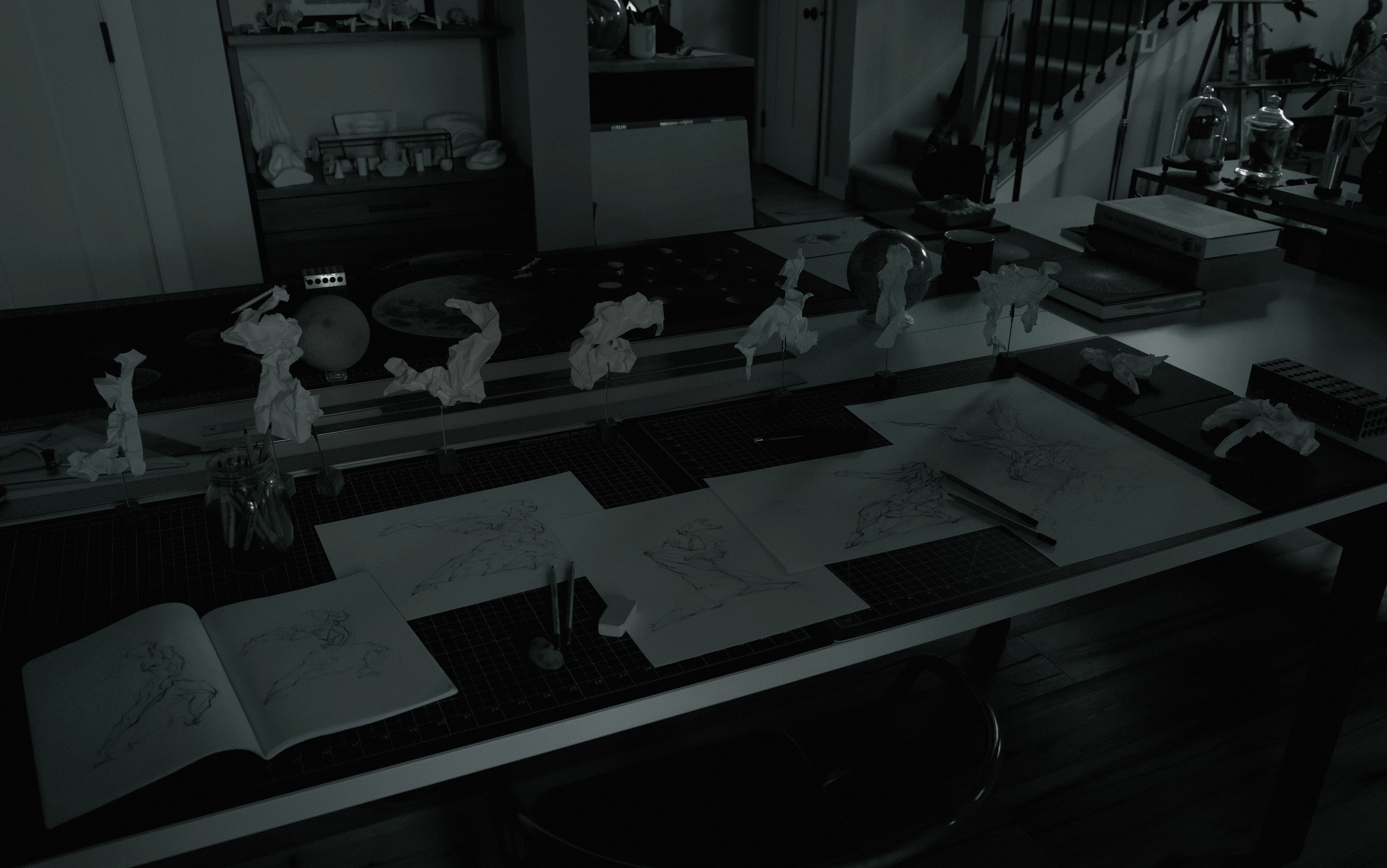
What is Pariedolia?
Pareidolia occurs when the mind sees images in random visual information—faces in clouds, figures in tree bark, creatures in the moon, and in this exhibition, living forms in torn and twisted paper. This project uses that instinct as a creative engine.
I begin by shaping paper into spontaneous, irregular forms. I search these shapes for any suggestion of figures or creatures. When something emerges, I draw it—not as paper, but as a living entity implied by the form. Most paper shapes reveal nothing, but a few contain surprisingly vivid potential.
Before entering the Exhibition Catalogue, take a moment to study the raw paper specimens below. These fragments form the foundation of the drawings that follow.
What do you See?
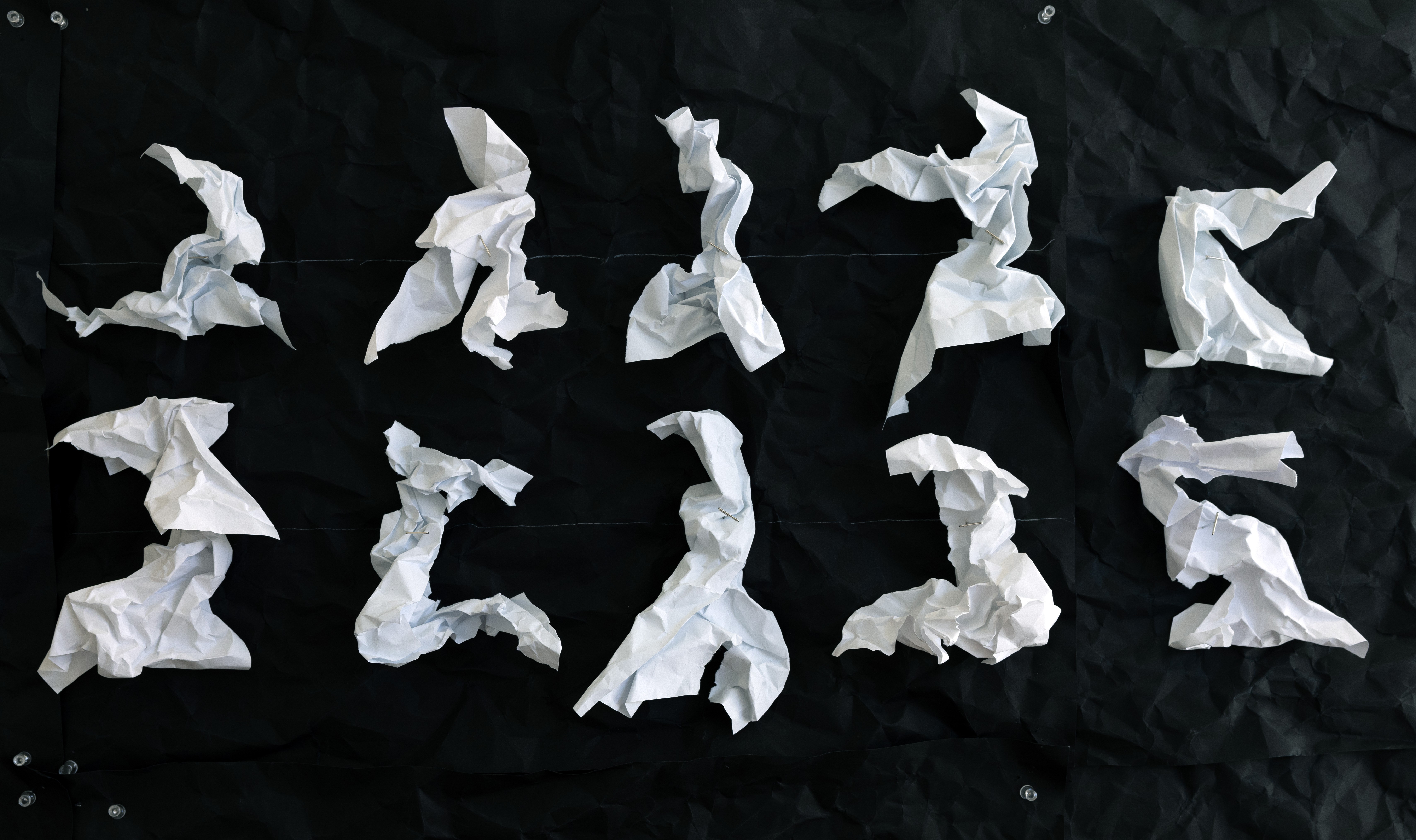
Take a look at this selection of my paper specimens. What do you see? There are no right of wrong answers-different people find different things, and that openness is central to this project.
Now that you’ve encountered the raw material of this project, continue to the Exhibition Catalogue to see the drawings that emerged from these forms. To explore the process behind the work—including methods, experiments, and field notes—visit Notes from the Studio.
Brent Noel Eviston
EXHIBITION CATALOGUE
THE PARIEDOLIA PROJECT
Each drawing in this exhibition is first presented as a softened, cloud-like impression of what might be there. Explore what you see.
Develop your own interpretation of the shapes and forms, then click the image to reveal my interpretation.
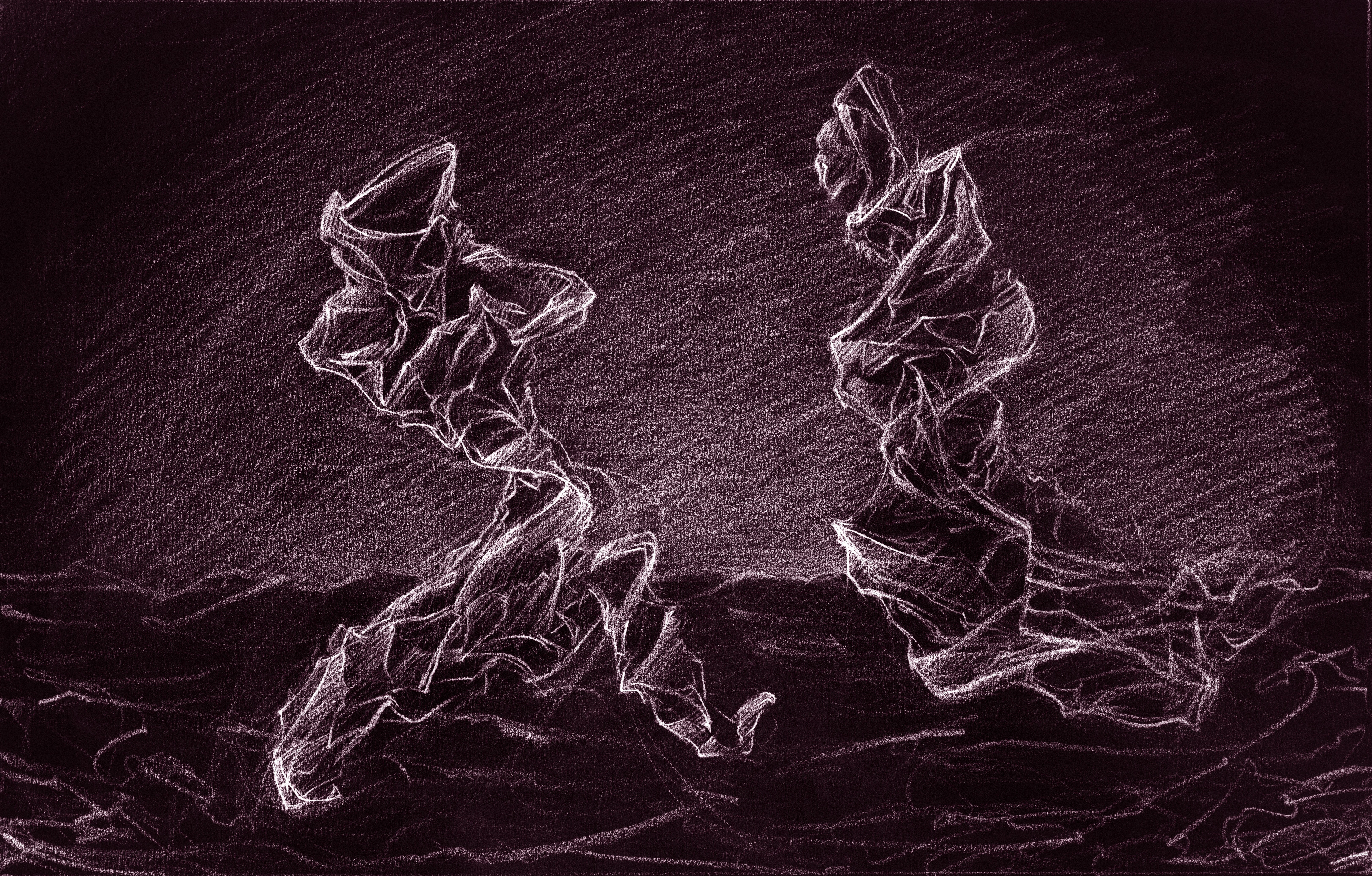
Between 2 Currents
Two rising forms drift toward one another across a shifting ground, perhaps approaching, perhaps circling, perhaps retreating. Whether this moment is a meeting, a standoff, or a passing glance is left for you to decide.
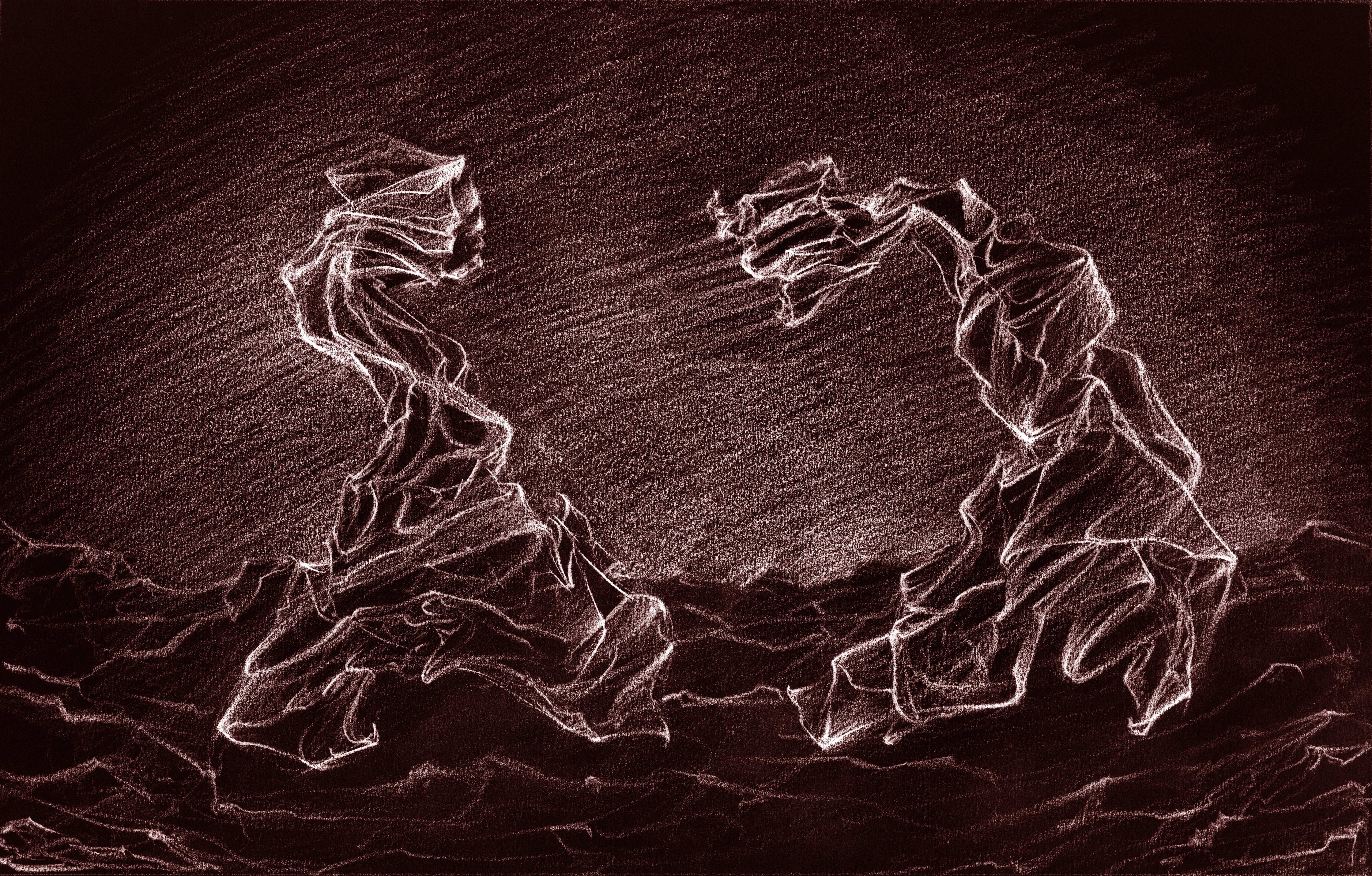
Confrontation
Two figures face toward one another as if drawn together by curiosity, caution, or something unresolved between them. Whether this is an inquiry, an attack, or the beginning of withdrawal is for you to decipher.
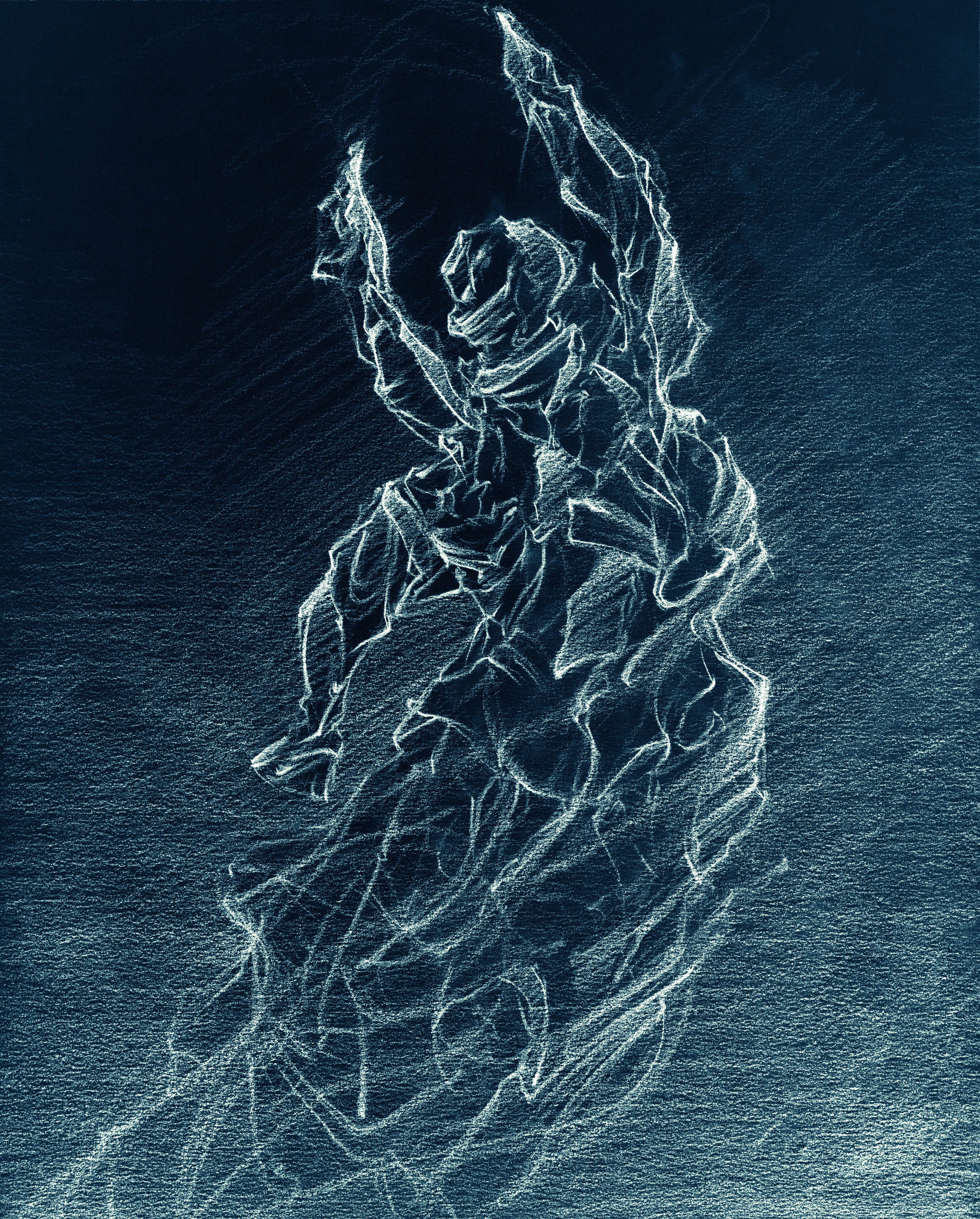
Ascent
A single figure rises with an energy that could be triumph, struggle, summoning or escape. What does it look like to you? Does this motion feel familiar, foreign, aspirational?
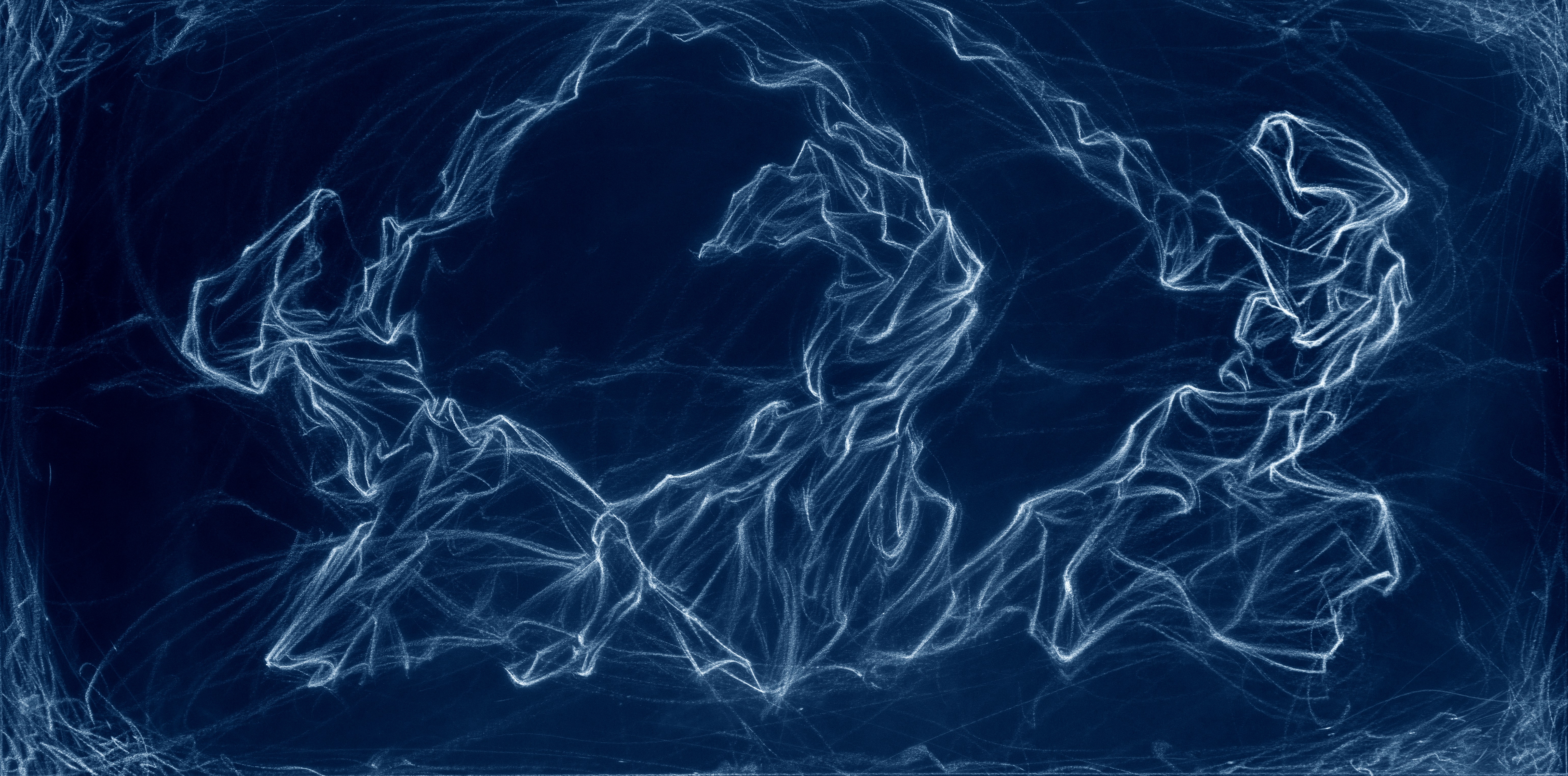
Witchery
Three forms gather around a widening void, their stance suggesting an unseen ritual. Do they appear to you as guardians, dancers, wretches or rogues? What do you dance around?
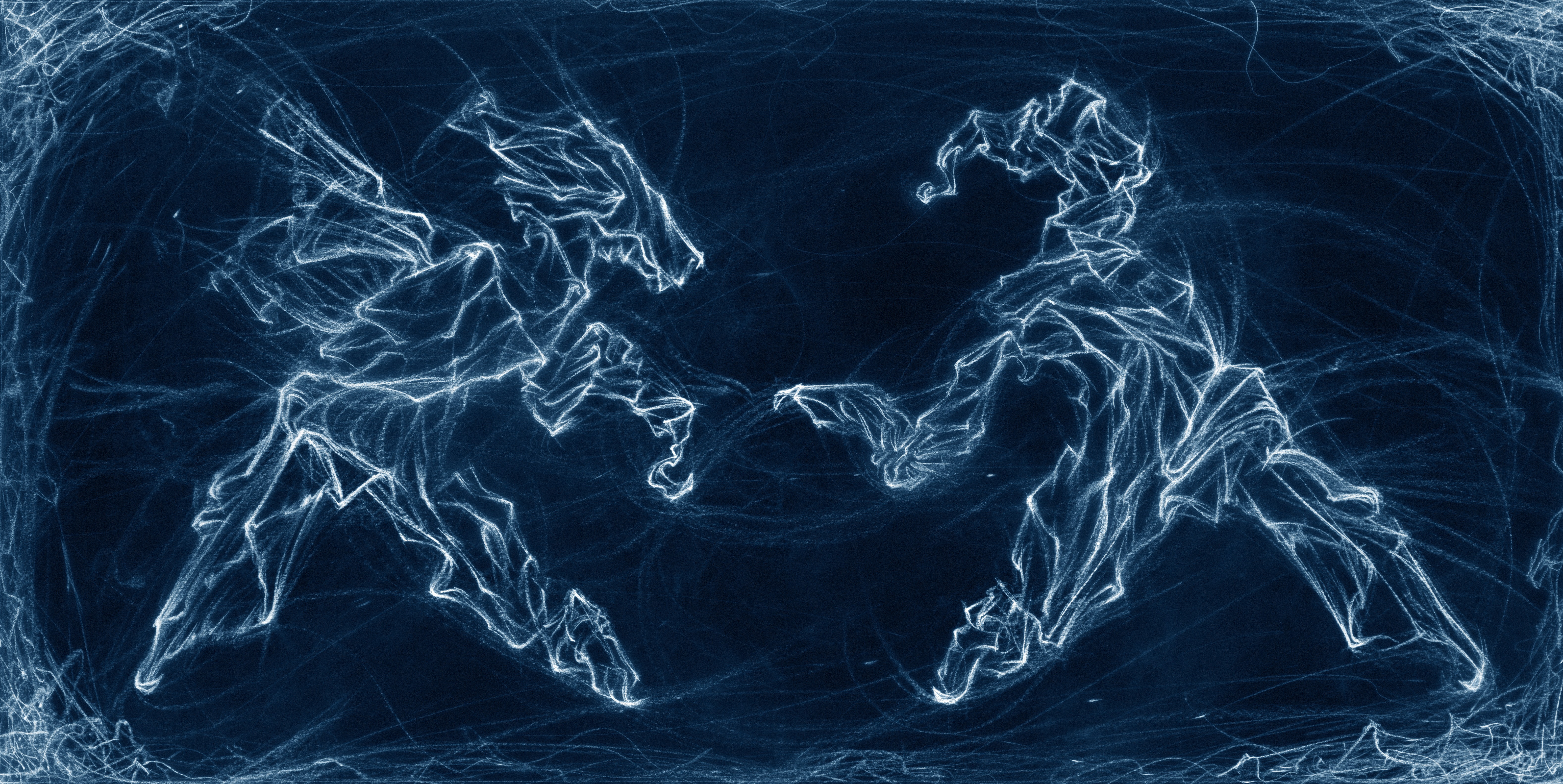
Twins
Two figures mirror one another in a posture that could suggest sparring, dancing, testing or an attempt to reunite. Do you see conflict, companionship or imitation? When confronted with your own double, what might you recognize and what might you reject?
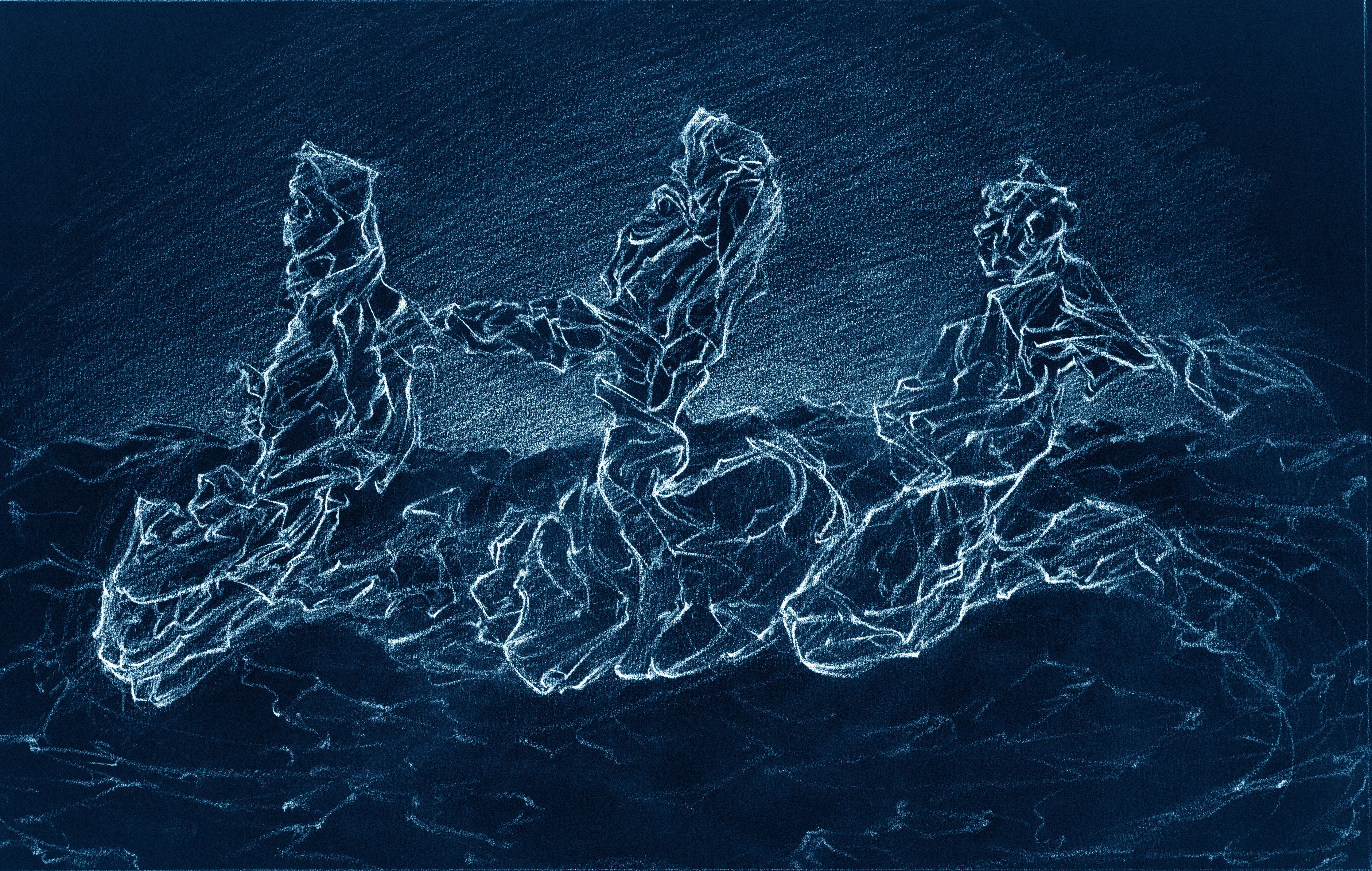
Trio
Three figures emerge in loose formation, their gestures hinting at alliance, negotiation or a shift in loyalties about to occur. Who makes the decisions, who follows and where do you find yourself in such a situation?
My original pareidolia drawings are created with black pencil on white paper. But unlike my traditional, observational drawings, these imaginative works undergo a digital transformation. Once the drawing is complete, I invert its values so the paper becomes dark and the graphite lines glow. I then tint the image—an intuitive process inspired by silent-film color techniques that creates atmosphere and mood. The resulting image restores the white of the paper specimens and has an ethereal glow, giving the paper forms an almost apparition-like presence.
Each drawing in this exhibition is first presented as a softened, cloud-like impression of what might be there. Explore what you see. Develop your own interpretation of the shapes and forms, then click the image to reveal my interpretation.
Viewers often see surprisingly specific beings in these drawings—creatures with distinct genders, ages, intentions, or emotional states. What fascinates me is how frequently these interpretations differ from my own.
For me, this project is part art, part science, and part séance. It invites me to ask: why did my mind choose these forms? What does this reveal about my identity, my archetypes, or the inner models I use to make sense of the world? Who are these entities that surfaced from random folds of paper—and why these, and not others?
And you, dear viewer: your interpretations almost certainly differ from mine. Why did your mind gravitate toward the forms it chose? What might those figures reveal about your own inner landscape?
In this way, the exhibition becomes a collaboration between us. My drawings are only one version of what these shapes could become. Your interpretations complete the picture. This exhibit is as much about your inner world as it is about my own.
As you continue exploring—or revisiting—these images, notice what appears first, what shifts over time, and what stays. Pareidolia has a way of revealing more than we expect.