
What is the Naturalist's Cabinet?
When scientists and naturalists shifted away from drawing and toward photography as a primary method of documenting their subjects, something essential was lost. The act of drawing was not merely a way to document a subject, but an intimate act that bonded scientists to their subjects. In order to draw something, a deep and sustained form of exploration and investigation must be undertaken where every detail, texture and structure must be noticed examined and then crafted in the drawing.
I am no scientist. But I do yearn to connect deeply with the physical world around me. The following is a collection of drawings of natural objects I desired to experience more deeply than mere looking would allow.
These drawings were created from direct observation with the actual object directly in front of me. The only exceptions were the drawings of the moon and clouds which were drawn from a combination of direct observation and photographs I took myself.
My drawings are not intended to be finished or framable works of art, they are more akin studies in a sketchbook. My goal was not to create “good” drawings, but rather to use the process of drawing to connect deeply with objects I find compelling and beautiful. They are presented in a “Wunderkammer” style; as themed cabinets of curiosity rather than as standalone drawings. I hope they inspire you to endeavor your own explorations through drawing.
Brent Noel Eviston

Exhibition Catalog
BOTANICAL STUDIES
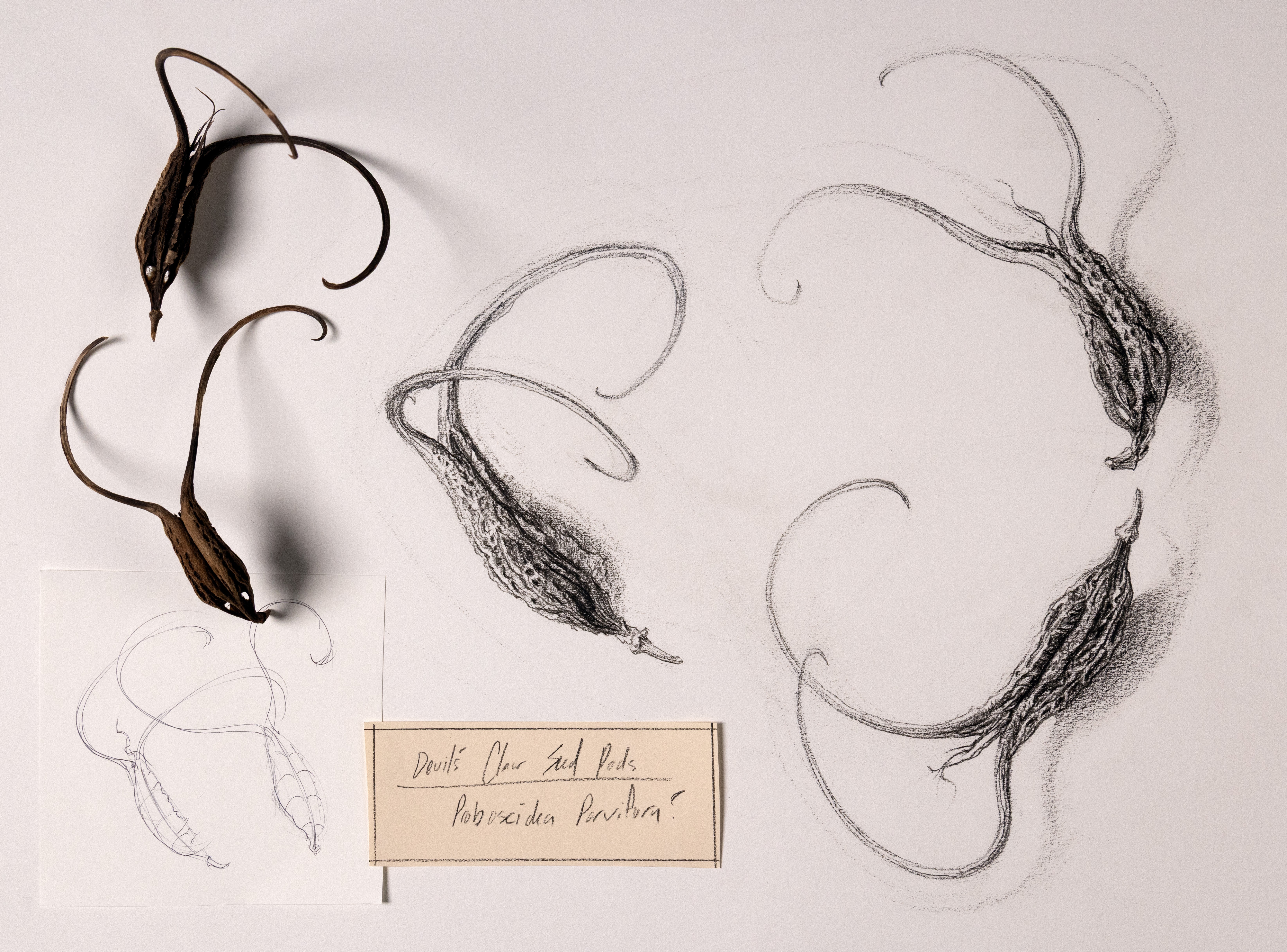
Devil’s Claw Seed Pods
These strange seed pods appear somewhere between insect or alien. I have a collection of 6 at my studio. The long hooks of each curve in different ways.
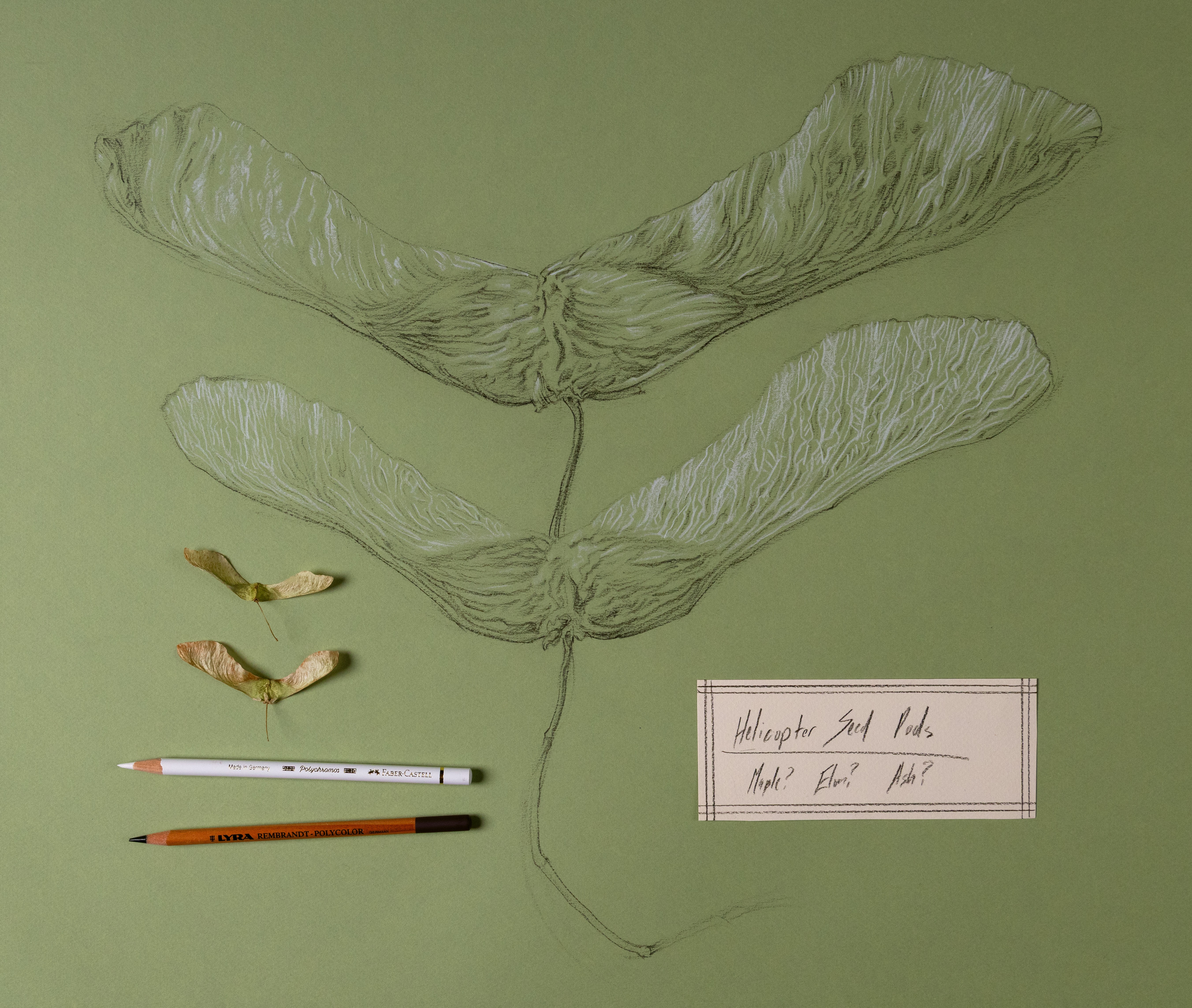
Helicopter Seed Pods
I encounter countless helicopter pods every walk I take. They are incredibly common around my studio, but each carries an intense beauty when studied up close. These large drawings aim to capture the complexity of the veins on the wings of each pod.
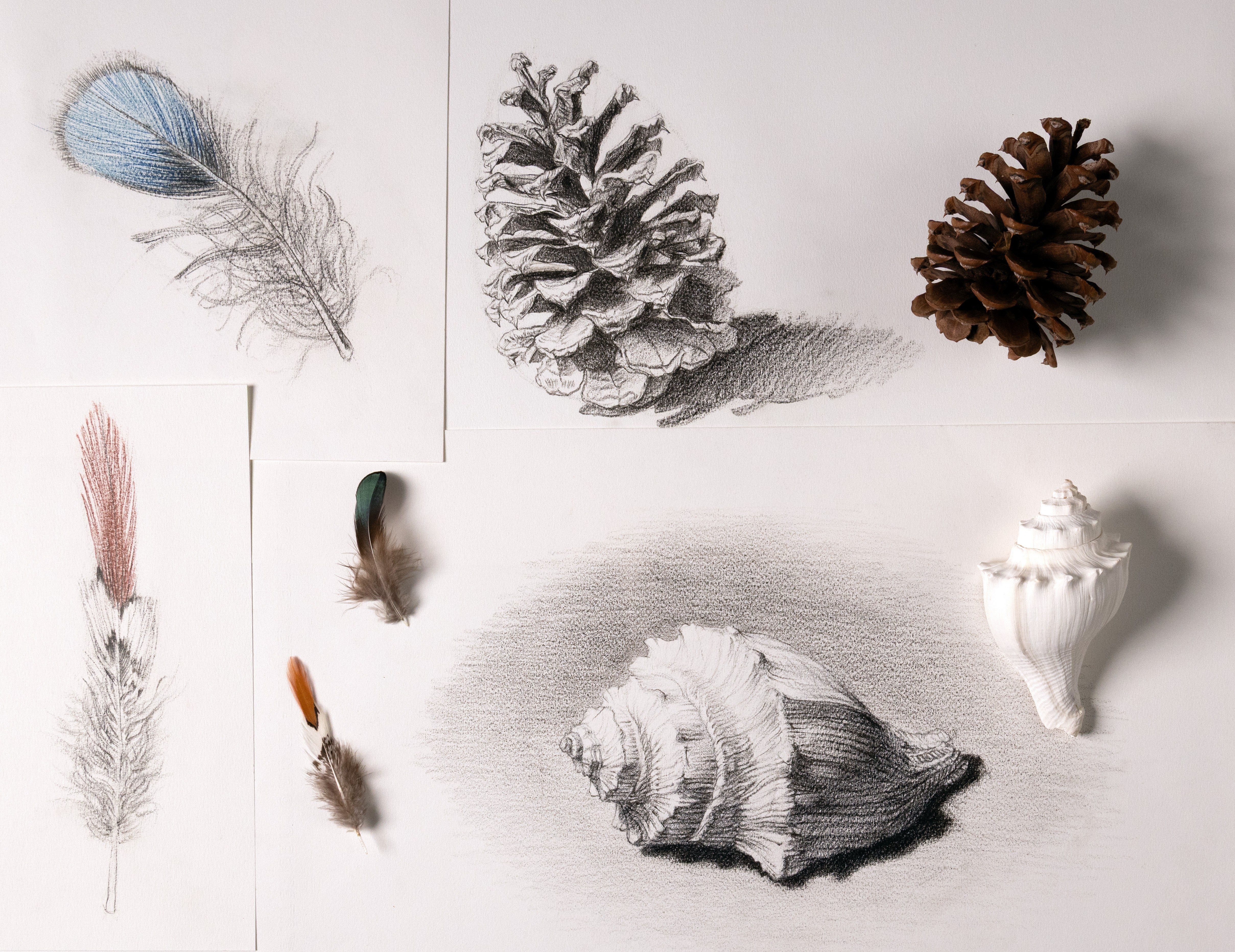
Cabinet of Natural Objects
A small collection of found natural objects drawn directly from observation. Each drawing is paired with the actual object it is based on.
DRAWN TO THE MOON
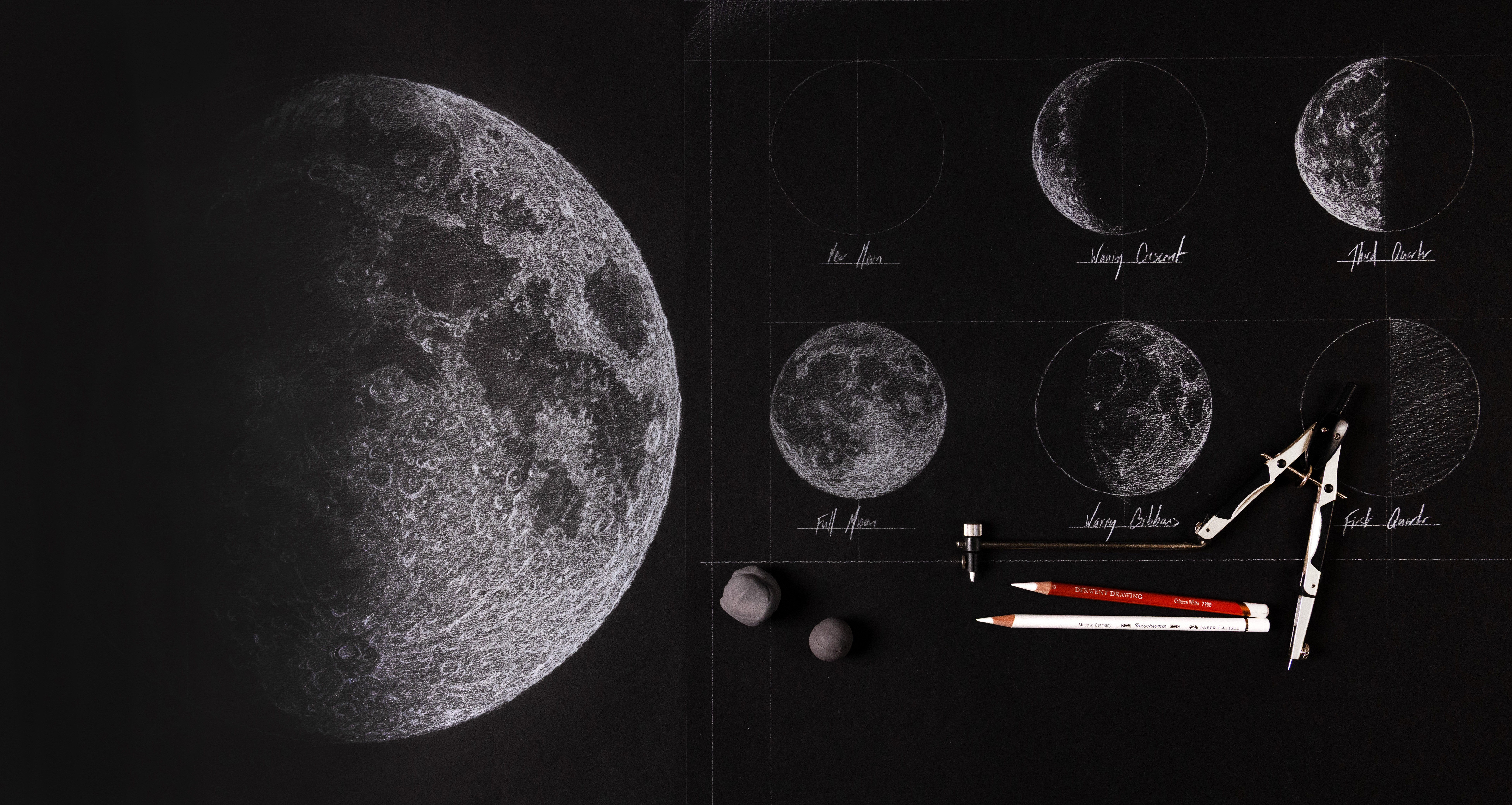
Lunar Cabinet 1
For an entire lunar cycle of 30 days I documented the moon through drawings, notes and photographs. On the left is the largest, most detailed study I created of the moon and on the right are unfinished studies of its various phase
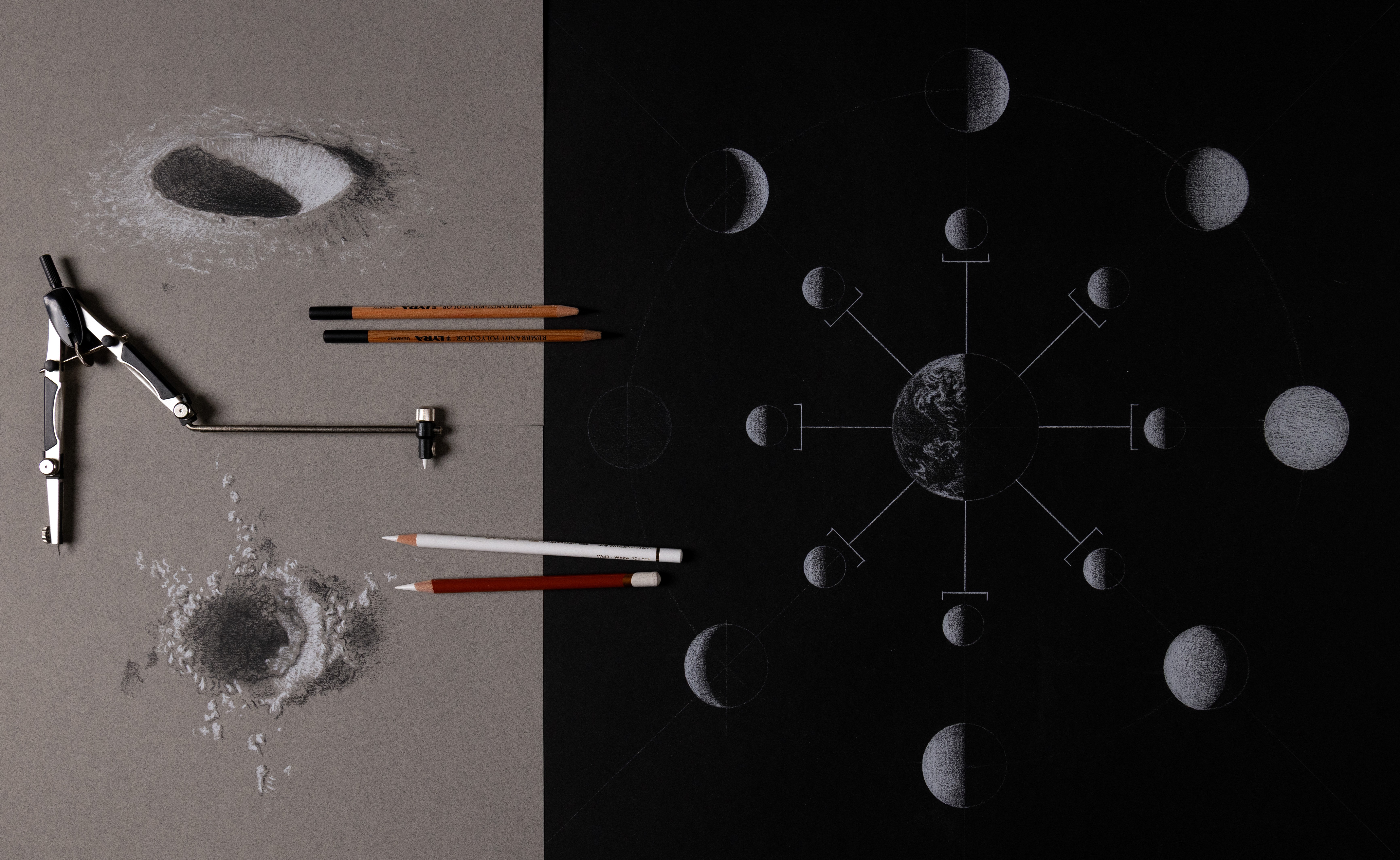
Lunar Cabinet 2
These are additional lunar studies including 2 crater studies on the left and on the right is a diagram of the phases of the moon as they appear from earth.